

Artificial Sports Turf Installation Built to a Measured Standard
A playing surface that holds its hardness, its footing and its schedule from the first session of the season to the last. We build fields, practice areas and training surfaces to a stated GMAX specification, then test the finished surface before we hand it over.
🛡 GMAX Tested Before Handover
⚙️ Shock Pad Specified, Not Assumed
📐 Inlaid Line Markings, Not Painted
💧 Drainage Sized for a Full Schedule
Artificial Turf for Athletic Facilities Built for Year-Round Play
Athletic facilities need playing surfaces that stay safe and consistent no matter how often they are used. Natural grass wears down quickly under cleats, turns muddy after rain, and needs time to recover between games. Artificial turf for sports gives teams a surface that is ready for practice and competition almost every day of the year. The right system depends on the sport, the number of users, and the level of play, so turf type, infill, and padding all matter. We handles artificial sports turf installation from the ground up, starting with base preparation and drainage that keep the surface level and playable for years.
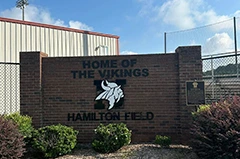
Turf Restoration and Design builds athletic surfaces with our own crews and specifies the system rather than ordering a product. We select the shock pad to the performance target instead of taking whatever comes bundled with a turf order, we inlay line markings so they are not a recurring paint cost, and we test GMAX on the finished surface and give you the numbers in writing rather than asking you to trust the installation. We also maintain fields after we build them, which includes the grooming, decompaction and top-dressing that keep a surface inside spec as it ages.

Our Services
We work across four commercial categories. Athletic surfaces are the most technically demanding of them, but the same principle applies to all four: the build is specified for what the space has to survive.
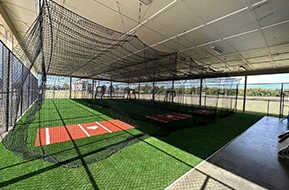
Athletic Facilities Turf Installation
Fields, practice areas, training surfaces and multi-sport builds engineered to a stated performance target and tested before handover.
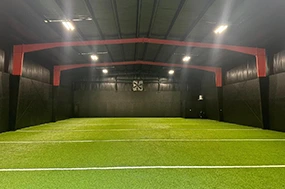
Entertainment Facilities Turf Installation
Venues need a surface that survives a crowd on Saturday and photographs well on Sunday.
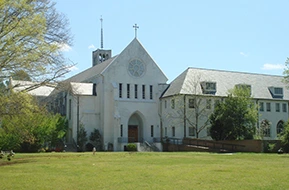
Places of Worship Turf Installation
Congregations usually have more grounds than budget and volunteers carrying the difference. Converting lawns, courtyards.
School Turf Installation
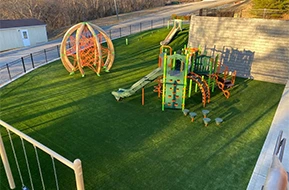
A surface that handles several hundred children a day, drains fast enough to get them back outside after rain, and meets the safety standards
Artificial Turf for Indoor Sports Training Centers
Indoor facilities use turf for training fields, speed and agility lanes, sled pushing tracks, and small-sided games. Artificial turf for indoor sports needs a different build than an outdoor field because there is no rain to drain and the floor underneath is usually concrete. Shock pads and the right pile height help reduce strain on joints during repeated drills. Turf Restoration and Design measures each room, plans around walls, columns, and equipment, and installs the turf with our own crew and our own tools. We never hand a job to a subcontractor, so every seam and edge gets the attention an indoor training space needs.
We plan overlay fields around a primary sport and set the surface specification to it, then inlay secondary markings in colours and weights chosen so players can pick out the right lines at speed rather than hunting for them. Where a sport genuinely cannot share the specification, we will say so rather than deliver a field that suits nobody. Inlaid markings also mean a change of sport is a matter of moving goals, not of repainting the field between seasons.

Benefits of Our Service
The Schedule Stops Depending on the Weather
A properly drained field is playable within a short time of a downpour, which recovers the sessions, games and rental income that currently disappear every wet week.
Surface Hardness Becomes Something You Can Measure
GMAX gives you an actual number for how the field is performing, so surface safety is a documented figure rather than a judgement call made by whoever walks it.
Line Markings Stop Being a Weekly Job
Inlaid markings remove the paint, the labour and the equipment from the routine, and they do not fade halfway through a season or ghost when the field changes sport.
The Goalmouth Looks Like the Rest of the Field
LoreHigh-wear zones are where grass fields fail first and where they cost the most to repair, and a synthetic surface holds those areas at the same standard as the sidelines.
Synthetic Turf for Batting Cages & Practice Areas
Some parts of a facility take more punishment than the main field. Batting cages, pitching lanes, goal mouths, and warm-up zones wear out fastest because players repeat the same movements in one spot. Synthetic turf built for these high-wear areas uses denser fibers and a stronger backing to keep its shape. Turf Restoration and Design installs practice surfaces that stay flat and consistent, so athletes train on the same feel they get during games. Facilities that want matching turf around entrances, walkways, and spectator areas can pair this with our commercial turf installation service.
For full infields we can build skinned areas, base paths and sliding zones as one system, which removes the daily dragging and watering and takes bad hops out of the equation for both teams.

Commercial Turf Installation
Retail spaces
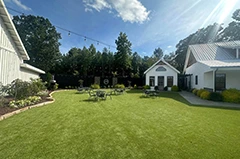
Restaurants & Hotels
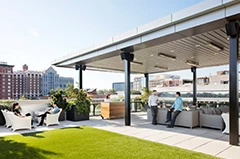
Office buildings
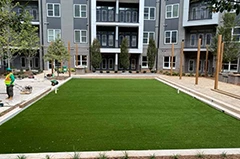
Apartment & Condos
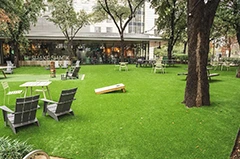
Malls & Commercial outlets
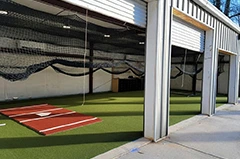
Athletic Facilities
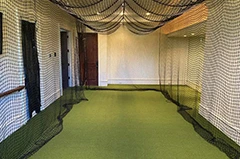
Entertainment Facilities
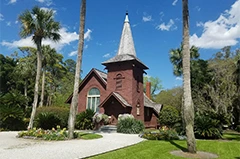
Places of Worship
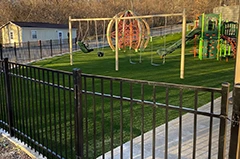
Schools
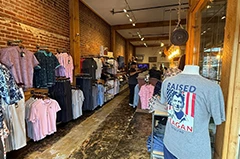
Malls & Retail Plazas
Residential Turf Installation
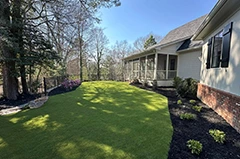
Backyard Lawns
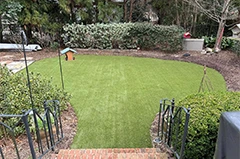
Backyard Putting Greens
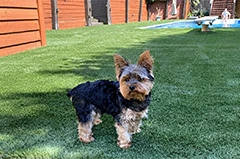
Pet Friendly Turf
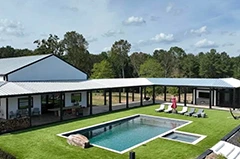
Poolside Turf
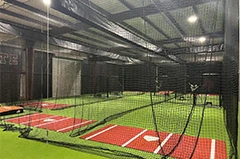
Playground Turf
Artificial Turf for Multi-Sport Municipal Complexes
Parks departments and recreation leagues often run soccer, football, lacrosse, and youth programs on the same fields. The best artificial turf for multi-sport municipal complexes balances durability, player safety, and clear line markings for each sport. Different colored lines help players and referees follow the right boundaries without confusion.
Turf also allows back-to-back games and weekend tournaments without resting the field. As a licensed and insured member of the National Synthetic Turf Council, Turf Restoration and Design helps planners and facility managers choose a system that fits their schedule and budget. We also offer playground turf installation for nearby play areas, so the whole complex stays clean and easy to maintain.

Our Work Process
01
We Assess the Field, the Subgrade and the Drainage
We survey the existing surface, test how the ground drains and establish what the field will be used for and how often. That sets the performance target the whole build is designed to hit.

02
We Build the Drainage, Base and Shock Pad to Spec
The subgrade is cut and shaped, the collector drainage installed, the stone base compacted to tolerance and the shock pad selected to the GMAX target rather than to whatever is cheapest to bundle.

03
We Install, Inlay the Markings and Test Before Handover
Turf is laid with the pile running consistently, markings are inlaid rather than painted, infill is set to the specified rate, and the finished field is GMAX tested with the results given to you in writing.
What People Are Saying About Us
Testimonials
We had a strip of yard that never grew anything but weeds and mud. They regraded the whole thing before they laid anything down, which nobody else who quoted us even brought up. Two summers in and it still looks like the day they finished.
Johns Creek, GA
Two labs and a yard that turned into a swamp every time it rained. They walked us through the drainage and the pet infill instead of just handing over a number, and there is no smell at all. The dogs took about ten seconds to decide they approved.
Roswell, GA
I asked for a putting green and they came back with a layout that used a slope I thought was a problem. Three real breaks on it now and it rolls true. They were on site every day and cleaned up behind themselves every evening.
Peachtree Corners, GA
Our courtyard was costing us a fortune in irrigation and yearly sod repair. They phased the work so tenants were never fully blocked off, and they hit the dates they gave us. That maintenance line has basically disappeared from the budget.
Artificial Turf Field Installation for Outdoor Sports Fields
Football, soccer, lacrosse, and baseball fields carry heavy loads from players, equipment, and fans. Artificial turf for sports fields must drain fast, grip well, and hold up to sharp cuts and sudden stops. A proper artificial turf field installation starts with grading and a compacted stone base that moves water away from the playing surface.
The turf is then laid, the seams are secured, and infill is added to support footing and ball roll. Game lines and logos can be inlaid during installation, so they do not need repainting each season. Our team builds fields for clubs, private academies, and school turf installation projects with the same careful process.

Frequently Asked Questions
ASTM F1936 sets 200 as the absolute maximum, but that is a failure threshold rather than a target. Most well-performing fields sit between 80 and 150, and FIFA Quality standards call for 60 to 180. Below 80 a field can be over-cushioned, which affects ball behaviour and makes footing less predictable. Testing should be done by an independent laboratory rather than by the installer, and an ISO 17025-accredited lab is the standard to ask for.
Grooming, decompaction and top-dressing, on a schedule rather than when something looks wrong. GMAX rises over time because infill compacts and migrates out of the high-use zones, so the surface gets harder in exactly the areas taking the most impact. Regular brushing redistributes infill and stands the fibers up, decompaction loosens what has packed down, and top-dressing replaces what has been lost. Annual testing is the industry benchmark, and fields exceeding 1,000 hours a year should consider testing twice.
No. Crumb rubber is the traditional choice and still performs well, but coated sand, TPE and organic infills such as cork and coconut are all in regular use, and several facilities specify against crumb rubber for community or policy reasons. The trade-offs are real: organic infills run cooler but need moisture management, and some alternatives cost more per square foot. We will lay out the options against your performance target and your budget rather than defaulting to one.
Usage, maintenance and the quality of the base, roughly in that order. A well-built field carrying a normal schedule generally gives eight to twelve years of service before the surface needs replacing, and heavily used fields sit at the lower end. The base underneath usually outlives the turf, which is why a second installation costs less than the first. Skipping the grooming and top-dressing is what turns a twelve-year field into an eight-year one.
A full field build is typically a matter of weeks rather than months, and the exact window depends on the size, the drainage work required and the weather during the excavation phase. We give you a dated schedule before we start and work to it, because a facility has a season to plan around. Where a site has several surfaces we sequence them so you are never without a usable field, and smaller builds like cages, bullpens and training areas are usually finished inside a week.
How Many Playable Hours Is Your Field Losing Every Year?
Contact Us
Count the sessions cancelled for standing water, the weeks the field is rested, the days lost to re-sodding and the months it simply is not growing. That total is the capacity a synthetic surface gives back.
678-227-9446
info@turfrestorationanddesign.com
Area We Serve
Athletic work needs a contractor who is close enough to come back, because a field is not finished at handover. Grooming, decompaction, top-dressing and periodic testing are what keep a surface inside spec through its service life, and a company three hours away will not do them properly. We keep our radius short for that reason and handle every project with our own crews.
- Braselton, GA
- Gainesville, GA
- Cumming, GA
- Milton, GA
- Alpharetta, GA
- Johns Creek, GA
- Suwanee, GA
- Athens, GA
- Roswell, GA
- Sandy Springs, Ga
- Dunwoody, Ga
- Peachtree Corners, GA

Karen M.
Milton, GA